

.webp)
.webp)
.webp)
.webp)


Annapurna Base Camp 7 Days Trek offers stunning mountain views, charming villages, rich culture, and an unforgettable adventure—all in one trek. It is one of the most loved treks in all of Nepal, and for many good reasons.
The Annapurna Sanctuary, where ABC sits, is a natural amphitheater surrounded by massive Himalayan peaks from all sides. The moment you arrive at 4,130m you will see a complete 360-degree circle view of the giant's mountain that is surrounding you. Every sore muscle, every steep climb, every early morning it all makes perfect sense that you have reached heaven. This is the view that you will carry throughout the rest of your life. Annapurna Base Camp trek is shorter, more accessible, and passes through more diverse landscapes in compare to other populat trekking routes like everesst base camp trek and Manaslu Circuit Trek. It is a great choice for first-time Himalayan trekkers and experienced trekkers alike.
What makes trek to Annapurna Base Camp in Nepal special?
Trekkers don't just walk to a base camp they walk through Gurung villages, cross suspension, rustic bridges made from tree branches over roaring rivers, pass through dense bamboo and rhododendron forests, and slowly climb into one of the most dramatic mountain sanctuaries in the world. Every single day brings something new
Annapurna Base Camp Short Trek Highlights:
• Standing inside the Annapurna Sanctuary with a 360-degree view of the Himalayas
• Walking through traditional Gurung villages with warm local hospitality
• Dense rhododendron and bamboo forests on the lower trail
• Hot spring relaxation at Jhinu Danda on the way back
• Sunrise views over Annapurna I, Machhapuchhre and surrounding peaks
• Best for first time trekker since it is moderate
• Well-established trail with comfortable teahouses all the way
• Rich cultural experience in one of Nepal's most famous trekking regions
4130m
March to May / September to November
Minimum 1 person
The Annapurna Sanctuary, upon which ABC rests, takes the form of a huge natural amphitheater, which is surrounded by Himalayan peaks from all sides. From the place of the camp at an altitude of 4,130m, you can see an amazing view of a 360-degree view of the huge mountain that surrounds you. All the tired legs, climbed slopes, and dawn at 5 am are repaid a hundredfold when you see the Annapurna Sanctuary. This view will remain with you for the rest of your life.
In contrast to Everest Base Camp, the Annapurna Base Camp trek is much shorter, less strenuous, and travels through a wider variety of terrain. It is a great option for those who want to experience trekking in the Himalayas, but do not have the time to do Everest or are new to the region.
While visiting the Annapurna region, in addition to the standard base camp, you will also visit villages of the Gurung people, cross quaint bridges, climb over rocky ravines and enjoy the spectacular view of the Himalayas. Every day you will experience something new.
The journey will start from Kathmandu valley to Pokhara by bus. This ride will be adventurous as you travel through a dusty, rocky road having spectacular views of villages, farms, and mountains. It will take a long time of around 7-8 hours to reach Pokhara. The trekkers will be made comfortable in a 4-star hotel as they arrive in Pokhara. They will be able to relax and gear up for the start of their trek the very next day. An exciting journey into the beautiful Himalaya starts the following morning.
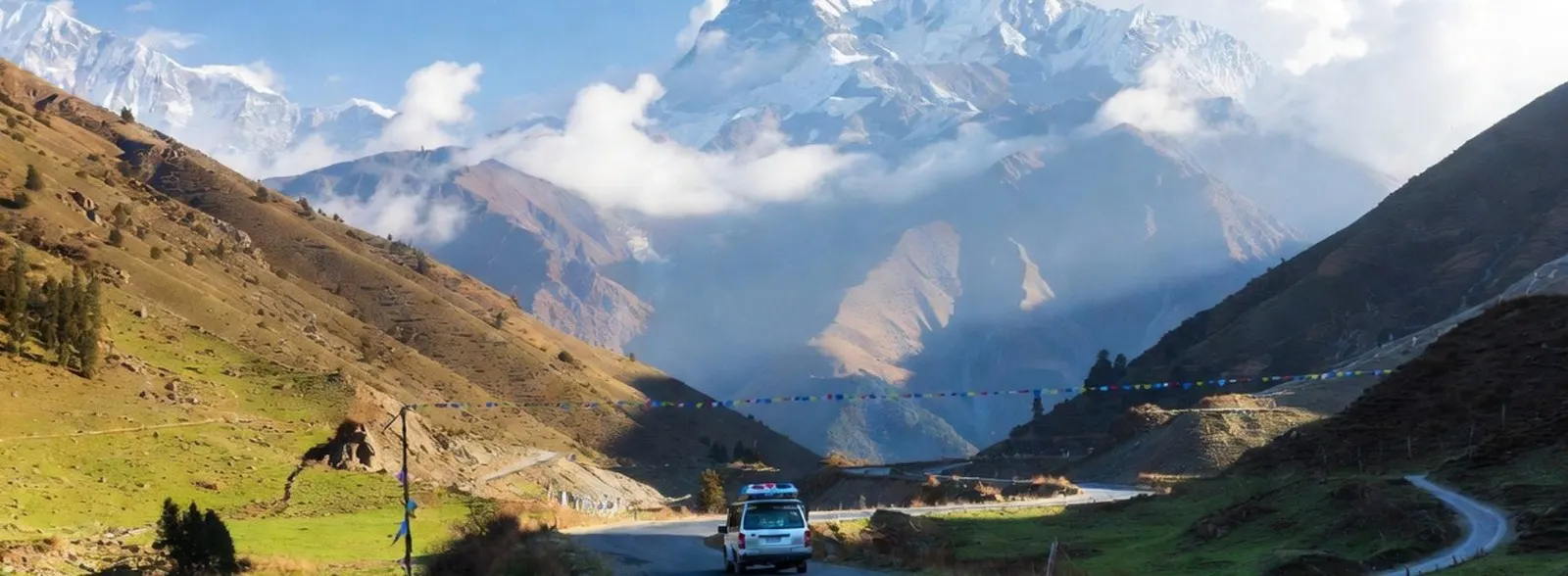
The journey of the bus is not over yet. The Pokhara trekking travelers will have a three-hour ride in a jeep to Jhinu located at an altitude of 1760m where they will have breakfast. From Jhinu the bus ride ends and the walking trail begins from where the trekking parties will have a walk of 15 to 20minutes before having their lunch. The trail from Jhinu is upwards leading to Chhomgrong(2170m) and it takes about 1.5 to 2 hours to get there.
The trail from Chhomrong is downwards heading to Kimrong Khola(1940m). It is a relatively flat path that takes about 30 to 45 minutes to cover. On the way, we can witness beautiful villages with Gurung’s habitations. From Kimrong Khola, the trail is upwards again leading to Lower Sinuwa(2260m). It takes about 1.5 hours of walking to reach Lower Sinuwa.
On the way to Sinuwa, if the weather permits, we have breathtaking views of the mountains and the landscape. From Lower Sinuwa, we have to walk up for about 1 hour before reaching Upper Sinuwa(2340m). In Upper Sinuwa, there are about 4 lodges. The first day of the trekking ends here and the travelers can relax in the lodge overnight. The lodge provides various facilities including Wi-Fi, hot showers, hot water, etc.
Interesting on third day, the trekkers will get to enjoy a wonderful view of Machhapuchre from Upper Sinuwa depending upon weather. The walker will have a brilliant walk of about 8-9 hrs to Deurali situated at an altitude of 3230m from Upper Sinuwa via Bamboo(2310m), Dovan(2600m) and Himalaya(2920m). The day’s hiking trail will start with the journey towards Bamboo. To reach Bamboo it will take about 1-1.5 hrs.
After reaching Bamboo the trekker will have lunch in Dovan after walking for about 1.5-2 hrs. On the route from Dovan to Deurali, the trekkers will come across rivers and waterfalls, and cross some rustic bridges of tree trunks and rocks. In Dovan the trekkers will have lunch.
By walking for 3-3.5 hrs the trekkers will reach Himalaya. On the way to Himalaya the trekkers will enjoy a magnificent view of mountain and the hills covered with tree. The trekker will see flower on their way.
From Himalaya it will take about 1-1.5 hrs to Deurali. On the way to Deurali from Himalaya you will get a chance to visit Pojenhyam Baraha Than Temple with beautiful water fall on opposite of the temple. There is also a Hinku Cave of lord Buddha Stupa at an altitude of 3170m. There are approximately 5 lodge in Deurali. When you go higher up the facilities get limited. However, the trekker will get hot shower, Wi-Fi, hot water and some other facilities. The overnight will be in Deurali.
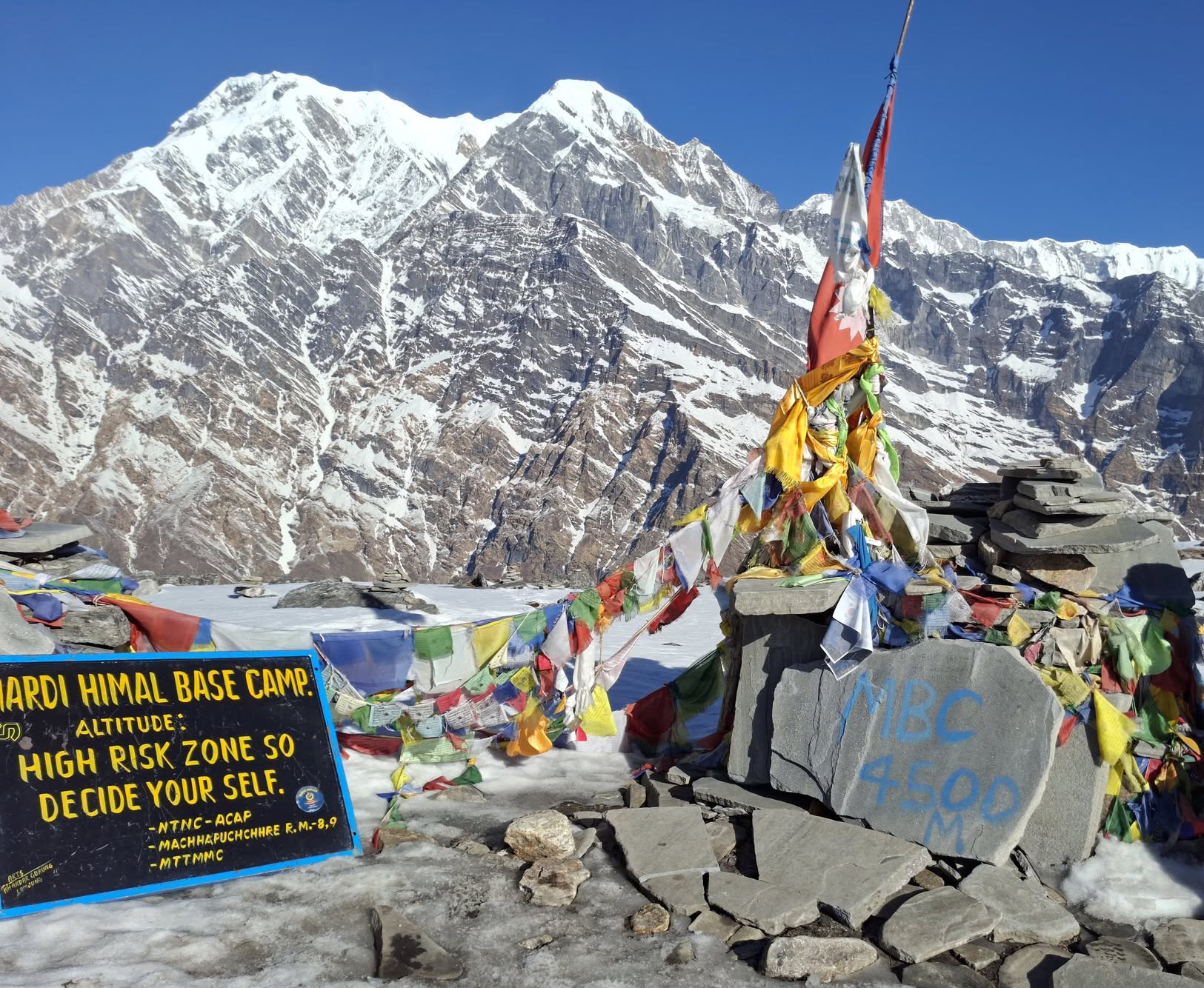
It is the most rewarding day of the trek as we reach Annapurna Base Camp, the target of the trek. It will be 6 to 7 hours’ long walk from Deurali to Annapurna Base Camp(4130m) through Machhapuchre Base Camp(3700m). To get to Machhapuchre Base Camp from Deurali, you will cross a bridge built from metal. And to get to MBC from Deurali is about 2.5 to 3 hours. From MBC, you will see the fantastic view of the mountains: Annapurna South Annapurna 3rd, Himchuli, Machhapuchhre itself, and many more. Besides, on the way to ABC, hikers will have the best view of the mountain. Moreover, at MBC, trekker gets lunch and has some time for rest and walk around the area. After that, you need to walk for 2 to 3 hours to get to ABC. From MCB, to ABC, walkers will get the best view of the mountains.
On arriving ABC, hikers will witness an all-rounded view of the mountain peaks such as Annapurna I, III, Machhapuchre, Himchuli, and many more. On the other hand, at ABC, there is only one tea house, and other tea houses are closed. Moreover, there is no facility of device charging at the tea house, and also the internet will be limited. So, it is the best idea to charge the device in MBC. At night, you will see a clear view of stars and can enjoy stargazing. Also, you will have overnight stay at ABC.
In the early morning, you have a breathtaking view of the beautiful sunrise over the beautiful mountains such as Annapurna I(8,091m), Annapurna South(7,219m), BarahiSikhar(7,647m), Himchuli(6,441m), etc. Then, you will have breakfast at Annapurna Base Camp and start walking towards Dovan. Hiking from ABC-MBC-Deurali-Himalaya takes about 6-7 hrs from Annapurna Base Camp to Dovan.
It takes about an hour to walk from ABC to MBC. From MBC to Deurali, it takes about an hour once you reach Deurali, walkers will return to Himalaya for lunch. You will have lunch in Himalaya, and then you will return to Dovan to spend the night. In Dovan, there are 5 different lodges to choose from. In Dovan, you can recharge your phone batteries, access the internet, take a hot shower, and much more.
After enjoying breakfast in the morning they will again trek back to Jhinu hot spring to take a jeep back to Pokhara. The return trek to Jhinu will start from Dovan passing through Bamboo, Upper Sinuwa, Lower Sinuwa to Chhomrong.
The trekkers will have to descend down through Bamboo to Lower Sinuwa which will take around 3-4 hours’ walk. Then they will also have to climb back up to Chhomrong which will take another hour for the trek and have lunch in Chhomrong.
After lunch, they will descend down to Jhinu Hot Spring, which will take one-hour walk. Then they have to cross the suspension bridge to reach the jeep. As soon as they will reach the jeep via the suspension bridge, the jeep ride will take them back to Pokhara, which will take around 3 hours. On arrival in Pokhara, they check in at the 4-star hotel and refresh in the hotel.
In the morning you have option if you are interested to go sarankot to watch the sunrise, paragliding, sky diving etc. then you can do that. The return flight to Kathmandu will be a daytime flight. After having lunch, you will be back to Kathmandu and check in the hotel.
Adventure Mountain Treks has a solution for you. Download the itinerary, customize your own trip, or talk to a trek expert today.
The highest altitude on the Annapurna Base Camp Trek reaches up to 4,130 metres. The trek is not challenging, nevertheless, an adequate acclimatization will allow you to fully enjoy the breathtaking views while avoiding altitude sickness. Hike at a steady pace and drink plenty of fluids as you reach higher altitudes. Eating healthy food, staying hydrated, and getting enough rest will help your body resist altitude sickness. If you feel any discomfort, notify your guide right away.
Lodges are the traditional mode of accommodation during your Annapurna Base Camp Trek. You will find comfortable beds, warm blankets in clean rooms to spend your evenings as you reach higher altitudes. Bathrooms are shared in the higher mountains, but you can enjoy hot water and Wi-Fi at an extra cost in most villages. It is important to mention that the comfort decreases as you trek towards higher altitudes.
You can look forward to a hearty meal in the teahouses while hiking Annapurna. The famous Nepalese dishDal Bhat is a healthy and hearty option as it is high in carbohydrates and comes with a free vegetarian side dish. You also have the option of choosing from noodles, fried rice, soup, pasta, momos, pancakes, eggs, porridge, and drinks. Additionally, most teahouses can prepare vegetarian meals upon request while vegan options are available in most villages.
As you hike on the trails, you can stay connected to the outside world as some parts of the trek offer cellular network services. It is recommended to let your family and friends know about your travel plans before heading out. You can also access the internet in most teahouses for a small fee, although the connection might be slow. Nevertheless, one of the best parts of hiking Annapurna is going off-grid and disconnecting from the digital world.
There is a wide variety of clean drinking water throughout the trek. You can buy packaged water at most places along the trail, but it is advisable to carry a reusable water bottle and fill it using boiled or filtered water. Water purification tablets and portable water filters are also available for purchase. It is crucial to carry a reusable water bottle to help cut down on single-use plastics and keep the Annapurna Conservation Area clean.
The Annapurna Conservation Area is one of Nepal’s most critical ecosystems, home to hundreds of species of flora and fauna and mountain communities living in harmony with nature. To ensure that this pristine landscape remains untouched and preserved for future generations, it is important to be responsible and eco-conscious while hiking Annapurna. For instance, you should carry your reusable water bottle and minimize the use of single-use plastics. Always dispose of waste responsibly while following local traditions and cultures. You should also support community-run teahouses and homestays.
Hiking Annapurna comes with its surprises as far as weather conditions are concerned. Although it is a fantastic time to trek in the Himalayas, be prepared for the fact that mountainous climates are unpredictable. Be prepared for chilly mornings, bright sunny days that turn cloudy by evening. On top of that, night temperatures tend to drop significantly at Annapurna Base Camp as you climb towards higher altitudes where the air becomes thinner. As a rule of thumb, it is advisable to dress in layers as you will need to shed some clothes as you trek uphill while putting on warmer clothes when you stop for the night.
The highlight of the Annapurna Base Camp Trek is experiencing the incredible adventure combined with a once-in-a-lifetime cultural expedition. As you make your way through the village, you have a chance to interact with the local Gurung and Magar people who embrace their traditions and offer tremendous hospitality to visitors. In addition to that, you can also enjoy local Nepalese cuisine in the village teahouses while spotting beautiful prayer flags fluttering in the wind.
If you love taking photos, you are in for an amazing experience as Annapurna offers unparalleled photo ops. Sunrise and sunset bring out the best views of the Himalayas as the peaks are highlighted by a golden hue. Taking photos of the natural landscape, waterfalls, forests, and rivers is an added bonus. With clear mornings along the trek, you can capture some incredible shots of the snow-capped peaks of Annapurna I, Machhapuchhre, Hiunchuli, and other surrounding summits.
Annapurna Base Camp trek is a popular hiking trail that offers a fantastic view and is relatively easy to follow. However, it is advisable to hire a local certified guide to ensure your safety as you hike the trail. A professional guide is a good companion as you trek higher altitudes since the weather can be quite unpredictable. Also, a good guide offers first aid assistance in case of an emergency and helps you navigate the trail.
It is every hiker’s responsibility to ensure that they leave no traces as they explore the Himalayas. It is a must to take all the trash with you, including plastic bottles and other garbage that you generate while hiking the trail. You can either throw them in the nearest dust bin or carry them all the way back with you to the trailhead. Following the Leave No Trace policies will ensure that the Annapurna Conservation Area remains clean and safe for future explorers.
No, you do not need previous trekking experience. The ABC trek is suitable for beginners as long as you are physically fit and comfortable with long days of walking. Many first-time Himalayan trekkers have completed this trek without any problems.
The ABC trek is rated as moderate. It is not technically difficult but it is physically demanding. The longest days involve 8–9 hours of walking and there are steep stone staircases, especially in Chhomrong. The altitude at ABC (4,130m) also means your body has to work harder than normal.
Altitude sickness can affect anyone, regardless of age or fitness level. The risk increases above 3,000m. It is important to walk slowly, drink plenty of water, and rest if you feel unwell. If symptoms like headache, nausea, or dizziness do not improve with rest, you must descend immediately.
You need two permits: the ACAP (Annapurna Conservation Area Project) permit and a TIMS (Trekkers' Information Management System) card. Both can be obtained in Kathmandu or Pokhara before starting the trek.
The best seasons are spring (March to May) and autumn (September to November). Both offer stable weather and clear mountain views. Spring has the added bonus of blooming rhododendrons on the lower trail.
Yes, most lodges on the trail offer Wi-Fi, though the connection gets weaker and slower as you go higher. At ABC itself, the Wi-Fi is very limited. There is no device charging available at ABC, so charge all your electronics at MBC before the final push.
Yes, solo trekking is allowed on the ABC route. The trail is well-marked and there are teahouses throughout. Solo female trekkers also regularly complete this trek safely. However, hiring a local guide is always recommended as they add safety, local knowledge, and cultural insight to your trip.
Temperatures vary a lot depending on altitude and season. In the lower sections (Jhinu, Chhomrong) daytime temperatures are warm, around 15–20°C in spring and autumn. At ABC, night temperatures can drop to -10°C or below, especially in winter. Always pack warm layers including a down jacket, thermal inner layers, and a good sleeping bag.
Teahouses along the route serve a wide variety of food including dal bhat (lentils and rice), pasta, noodles, soups, momos (dumplings), eggs, porridge, and more. The menu gets simpler as you go higher, but you will never go hungry. Vegetarian and vegan options are available throughout.
The overall cost depends on how you do the trek — with a guide or independently, in a group or solo, and your personal spending on food and accommodation. Contact Wildstep Himalayan Trek for a detailed and personalised package price.
Contact Wildstep Himalayan Trek today and take your first wild step into the Himalayas.
Step Wild. Trek Higher. Conquer the Himalaya.
Share your experience with Annapurna Base Camp 7-Days Trek
Thank you for sharing your experience. Your review will appear shortly after moderation.